Archives
Rare interviews, recovered recordings, and the voices of the pioneers who proved the Earth generates its own water.
Interview — 1985
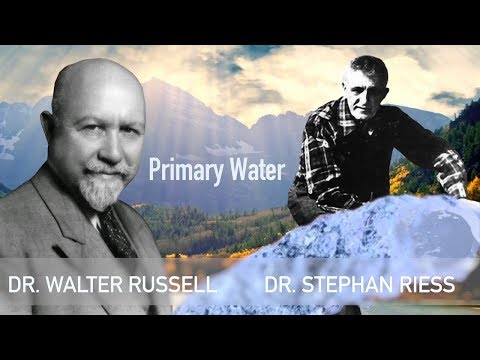
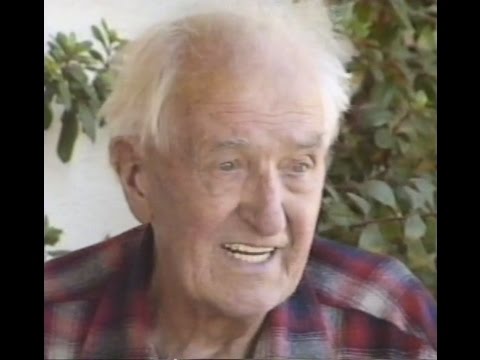
This captivating interview, conducted in Escondido, California on September 22, 1985, features Dr. Stephan Riess alongside Ross Frazier and Dr. Wayne Weber. In one of the last recorded conversations of his life, Riess shares his discoveries on water sourcing and geology — explaining the concept of primary water as originating from deep within the Earth, untainted by surface contaminants.
He contrasts this with surface water, which he states often carries pollutants, and argues for tapping deep wells as the path to sustainable, inexhaustible water supply.

"I do not look for water. I look for the rock conditions that produce water."— Dr. Stephan Riess
Interview — February 1985
Part of a series documenting Riess's life work, this interview expands on the mechanics of primary water — how oxygen combines with hydrogen deep within the Earth to form liquid water, which is then pushed toward the surface through fissures and faults.
Riess emphasizes that this water is distinct from the traditional hydrologic cycle: it has never been part of the atmosphere until it reaches the surface, making it a renewable resource regardless of weather conditions.
Recovered Recording — c. 1953
A previously unreleased reel-to-reel recording from the University of Science and Philosophy audio archive. In this extraordinary audio document, a letter written by Dr. Walter Russell — the polymath artist, philosopher, and scientist — is read to Dr. Stephan Riess. The recording captures Riess's feedback and thoughts in real time.
Russell and his wife Lao were reportedly overjoyed to find a working scientist whose field discoveries validated Russell's cosmological theories about the workings of matter. Russell saw Riess's discovery of primary water as direct confirmation of his own ideas about the dual nature of creation — that the universe operates through rhythmic interchange between compression and expansion, and that water is one of the fundamental products of this cosmic process.
"The meeting of Riess and Russell represents a rare convergence: the empirical field geologist and the illuminated cosmologist arriving at the same truth from opposite directions. Riess drilled into rock and found water that shouldn't exist according to textbooks. Russell described a universe where its creation was inevitable."— Primary Water Institute
The Pioneer
Born in Germany, Stephan Riess studied geology at the University of Austria and later chemistry and metallurgy in Germany before emigrating to the United States in 1923. His early career as a mining engineer in California led him to investigate the unusual and significant flows of subterranean water that frequently flooded deep mines — water with unique chemical characteristics suggesting an origin entirely separate from conventional groundwater.
Riess coined the term "Primary Water" and dedicated over five decades to its study and extraction. His work took him from the deserts of California to the Negev in Israel, producing clean, sustainable water in areas written off by conventional hydrology.
Successful wells drilled across California, Israel, Egypt, and Mexico
Success rate — 70 producing wells out of 72 attempts
Invited by PM Ben-Gurion to find water for the city of Eilat
Proposed 8,000 wells along the Sierra Nevada Mountains
Essential Reading
by Michael H. Salzman · 1960
One of the earliest comprehensive publications on primary water, Michael Salzman's New Water for a Thirsty World documents the pioneering discoveries of Dr. Stephan Riess and the scientific basis for earth-generated water. Written during the height of Cold War anxieties over resource scarcity, this book challenged the prevailing hydrological establishment by presenting extensive evidence that water is continuously manufactured deep within the Earth's crust.
Salzman meticulously details Riess's field work across California, Nevada, and Israel — documenting hundreds of successful wells drilled into hard crystalline rock in locations where conventional hydrology predicted no water could exist. The book remains a foundational text for understanding primary water theory and its implications for global water independence.